Phil Lempert
- Television & Radio News Reporter
- Newspaper Columnist
- Consumerologist
- Food Marketing Expert
- Author

Phil Lempert Speaker Biography
For more than 30 years, Phil Lempert, an expert analyst on consumer behavior, marketing trends, new products and the changing retail landscape, has identified and explained impending trends to consumers and some of the most prestigious companies worldwide. Known as The Supermarket Guru® Lempert is a distinguished author and speaker who alerts customers and business leaders to impending corporate and consumer trends and empowers them to make educated purchasing and marketing decisions.
As one of America’s leading consumer trend-watchers and analysts, Phil Lempert is recognized on television, radio and in print. For twenty plus years Phil has served as food trends editor and correspondent for NBC News’ Today show, reporting on consumer trends and showcasing new products, as well as regular appearances on ABC’s The View, FOX Business, Inside Edition, Dr. Oz, The Oprah Winfrey Show, 20/20, CNN, CNBC, FOX, as well as on local television morning and news programs throughout the country. For almost two decades, he hosted the syndicated show Shopping Smart on the WOR Radio Network.
Phil Lempert was one of the pioneers of the new information media, founding SupermarketGuru.com in 1994. The website is now one of the leading food and health resources on the Internet, visited by more than 9 million people each year. SupermarketGuru.com analyzes trends in food marketing and retail.
Phil is the founder and editor of The Lempert Report on Substack and SupermarketGuru.com. He has been profiled and interviewed by USA Today, The New York Times, The Christian Science Monitor, The Wall Street Journal, Forbes, Newsweek and Ad Age, and is interviewed by hundreds of publications each year. He is also a columnist for Forbes.com, Food News Today & The Robin Report.
He has served on the Executive Committee of Michelle Obama’s Chefs Move to School program. He was the founder and CEO of the Retail Dietitians Business Alliance which was acquired in 2022 by CMA; has developed and manages Foodservice@Retail: The Great Grocerant educational program for the National Restaurant Association, developed the Most Innovative Product Awards for the National Confectioners Association, developed the Supermarket Chef Showdown for the Food Marketing Institute, created and managed the Spud Nation Throwdown Competition for the National Potato Council. He also serves on numerous boards including: Sial Innovation Jury, Digital Health Awards and Food Allergy Research & Education (FARE).
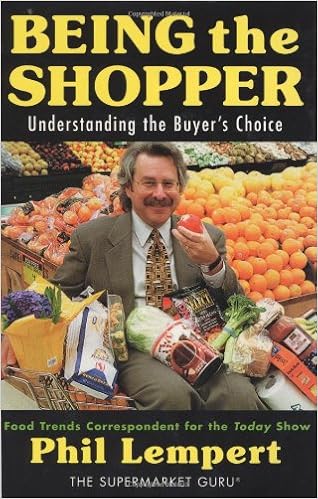
Lempert is the author of Being the Shopper and Healthy, Wealthy & Wise. His previous books include: Phil Lempert’s Supermarket Shopping & Value Guide, Top Ten Trends for Baby Boomers and Crisis Management: A Workbook for Survival. He is currently working on his next book which will be published by John Wiley & Son: Disrupting the Food Business: Silicon Valley Culture and the Food Business.
Phil Lempert graduated from Drexel University with degrees in Marketing and Retail Management and did his Post-Graduate studies at Pratt Institute. He worked at McDonald’s and Howard Johnson’s before joining his family’s food brokerage firm. Lempert went on to create Lempert Advertising, a full-service, award-winning advertising agency that specialized in food and retail branding, marketing and public relations.
A resident of California, Lempert’s roots are in the Belleville, New Jersey dairy farm started by his grandfather. The family food tradition carried on through his father’s work as a food manufacturer, distributor and broker and then to Phil Lempert, The Supermarket Guru®.
Philip Lempert has gained wide acclaim for his marketing savvy and broad experience. A distinguished speaker, he has addressed over 600,000 people over the past ten years and is a respected analyst with an uncanny ability to identify and explain trends to both industry and consumers in a thought provoking and entertaining manner.
Phil is the founder and editor of The Lempert Report and SupermarketGuru.com. He has been profiled and interviewed by USA Today, The New York Times, The Christian Science Monitor, The Wall Street Journal, Forbes, Newsweek and Ad Age, and is interviewed by hundreds of publications each year. He is also a columnist for Forbes.com.
He has served on the Executive Committee of Michelle Obama’s Chefs Move to School program. He is the founder and CEO of the Retail Dietitians Business Alliance; and has developed and manages Foodservice@Retail: The Great Grocerant educational program for the National Restaurant Association, developed the Most Innovative Product Awards for the National Confectioners Association, developed the Supermarket Chef Showdown for the Food Marketing Institute, created and managed the Spud Nation Throwdown Competition for the National Potato Council and hosts and developed the New Product Awards for the Fresno Food Expo. He also serves on numerous boards including Sial Innovation Jury, and the Seminis, Ingenuity, Foreager and Betterer Foods Advisory Boards.
Lempert is the author of Being the Shopper and Healthy, Wealthy & Wise. His previous books include Phil Lempert’s Supermarket Shopping & Value Guide, Top Ten Trends for Baby Boomers and Crisis Management: A Workbook for Survival. He is currently working on his next book which will be published by John Wiley & Son this fall: Disrupting the Food Business: Silicon Valley Culture and the Food Business.
Phil Lempert graduated from Drexel University with degrees in Marketing and Retail Management and did his Post-Graduate studies at Pratt Institute. He worked at McDonald’s and Howard Johnson’s before joining his family’s food brokerage firm. Lempert went on to create Lempert Advertising, a full-service, award-winning advertising agency that specialized in food and retail branding, marketing and public relations.
A resident of California, Lempert’s roots are in the Belleville, New Jersey dairy farm started by his grandfather. The family food tradition carried on through his father’s work as a food manufacturer, distributor and broker and then to Phil Lempert, The Supermarket Guru®.
Philip Lempert has gained wide acclaim for his marketing savvy and broad experience. A distinguished speaker, he has addressed over 600,000 people over the past ten years, and is a respected analyst with an uncanny ability to identify and explain trends to both industry and consumers in a thought-provoking and entertaining manner.
Book this SpeakerFeatured Videos


Speech Topics
Phil’s Insights & Topics
In preparation for his speech, Phil Lempert polls his online consumer panel about their attitudes on issues relevant to your products/services – it is your opportunity to understand how your current and future consumers are thinking about the most critical issues facing your organization and your industry in real time. Phil’s presentations are multimedia using impactful graphics and video clips.
The 5 Retail Shifts That Will Reshape Profit Margins in 2026
Retail is in the middle of the most disruptive reinvention it has seen in a generation — and most executives are still managing their margins the same way they did five years ago. That’s a dangerous place to be.
I’ve spent more than three decades watching consumer behavior, supply chains, and retail strategy evolve — and what I’m seeing right now is different. It’s not one seismic shift. It’s five of them hitting simultaneously, cutting across every category of retail — from grocery and apparel to electronics, home goods, beauty, sporting goods, and beyond. Whether you run 10 stores or 10,000 SKUs, whether your floor space is measured in square feet or your storefront exists only on a screen, these five forces are already compressing your margins — and the retailers who understand them first will be the ones who protect and grow theirs.
This is not a session about trends. It’s a session about money — specifically, where yours is going and how to get it back.
We’ll examine how the GLP-1 medication revolution is quietly reshaping purchase frequency and basket size across virtually every retail category, not just food. We’ll decode what the real cost of tariffs looks like when you strip away the political theater and do the unit economics. We’ll confront the uncomfortable truth about AI adoption — why retailers who invest in it wrong are burning cash, and why the ones who get it right are seeing margin recovery in 90 days or less. We’ll dig into the new consumer who is simultaneously trading up and trading down — sometimes in the same transaction — and what that split-screen psychology means for your assortment strategy and pricing architecture. And we’ll look at the labor equation: not as a cost-of-doing-business line item, but as a competitive differentiator that the best operators are turning into measurable revenue.
Every shift I’ll walk you through is backed by data, grounded in real retailer case studies, and actionable before you leave the room.
This is the keynote for retail leaders who are done hoping the market stabilizes and ready to build a business that wins no matter what comes next.
What Consumers Will Stop Buying Next – and Why It Matters
Every retailer in America is watching their sales data. Very few are reading the signals underneath it.
In my three decades at the intersection of consumer behavior and retail strategy — the most valuable skill I’ve developed isn’t spotting what people are buying. It’s spotting what they’re about to stop buying. And right now, the signals are louder and clearer than at any point in my career.
This isn’t a session about declining categories. It’s a session about the psychology, economics, and cultural shifts driving consumers to quietly — and permanently — walk away from products, brands, and entire shopping behaviors they once considered routine. And it’s not limited to food and beverage. The abandonment economy is hitting apparel, personal care, home goods, electronics, entertainment, and services with equal force.
The forces behind this shift are intersecting in ways that make this moment unlike any we’ve seen. Economic fatigue from years of inflation, shrinkflation, and hidden price increases has quietly broken something fundamental: brand loyalty. And a generation of consumers who grew up watching their parents buy things they didn’t need is now making a very deliberate choice to opt out.
What makes this particularly dangerous for retailers and brands is the silence. Consumers don’t announce these decisions. They don’t post about it. They don’t write complaint letters. They just stop showing up — and by the time the sales curve tells you the story, you’re already six months behind.
In this keynote, I’ll walk you through the categories most at risk, the consumer segments driving the abandonment, and the behavioral signals hiding in plain sight that most retailers are missing entirely. We’ll look at the science of consumer disengagement — what triggers it, what accelerates it, and critically, what can reverse it. We’ll examine the brands that saw the signals early and repositioned before the floor fell out — and the cautionary stories of those that didn’t. And we’ll translate all of it into a practical framework you can apply to your own assortment, marketing strategy, and customer relationship before the next abandonment wave hits your category.
Because the retailers and brands that survive what’s coming won’t be the ones with the biggest marketing budgets or the most SKUs. They’ll be the ones who understood — early, and specifically — what their customers were quietly deciding to live without.
And they acted on it.
Trend Watch: The Future of Your Business
The future doesn’t announce itself. It shows up in your data first — and most businesses aren’t reading it.
I’m tracking the forces that reshape markets before most executives even recognize them as forces at all. What I’ve learned is that the companies that win aren’t the ones with the biggest budgets or the best products. They’re the ones that saw what was coming — and built for it before everyone else did.
This keynote is built around five trends that are already rewriting the rules of your industry. Not someday. Now. Each one represents both a threat and an opportunity — and the difference between which one it becomes for your business depends entirely on how prepared you are to act on it.
- Technology at the Crossroads: The Customer Who Knows More Than You Think : Your customer has done the research. They’ve compared your prices, read your reviews, checked your competitors, and formed an opinion about your brand — all before they walked in the door or clicked on your site. The question isn’t whether technology has shifted the power dynamic between business and consumer. It has. The question is whether your organization has fundamentally restructured itself around that reality — or whether you’re still operating with a 2005 playbook in a 2026 marketplace. We’ll examine what it actually means to compete when information asymmetry is gone, and what the businesses that are winning in this environment are doing differently.
- America’s Financial Report Card: Building for the New Economic Reality : The American consumer’s relationship with money has been permanently restructured. Debt levels, savings rates, housing costs, and the psychological weight of years of inflation have created a new financial model that most businesses are still trying to serve with strategies designed for a different era. The opportunity isn’t in lamenting the changes — it’s in building products, services, and experiences that meet consumers exactly where they are financially. The businesses that understand the new math of the American household will find more runway than they expect. We’ll map out what that runway looks like and how to position your company to capture it.
- Micro-Advertising: Winning the Attention War in a Fragmented World { The 30-second spot is not dead — but the assumption that mass reach equals business impact is. Today’s consumer lives inside a personalized, algorithmic, on-demand media environment that is fundamentally hostile to interruption. Cutting through that clutter requires a different kind of thinking: smaller, smarter, more targeted, and built around moments rather than messages. We’ll look at what micro-advertising actually means in practice — how the companies doing it right are spending less and connecting more — and what you need to change about your marketing architecture to compete in a 24/7, always-on, deeply fragmented frontier.
- Social and Environmental Responsibility: Green Is No Longer Optional : Sustainability used to be a brand differentiator. Now it’s a baseline expectation — and the gap between what companies claim and what they actually do has never been more visible or more consequential. Consumers, employees, investors, and regulators are all asking the same question at the same time: what does this company actually stand for, and can we verify it? This isn’t a session about corporate values statements. It’s a session about competitive survival. We’ll look at what genuine environmental and social accountability looks like operationally — and why the companies that treat it as a cost center are losing to the ones that treat it as a growth strategy.
- The Aging of America: The Biggest Market Opportunity Most Businesses Are Misreading : The Baby Boomers didn’t quietly exit the economy when they hit retirement age. They rewrote what retirement means — for consumption, for the workforce, for healthcare, for housing, for technology adoption, and for brand loyalty. This is the wealthiest, most active, longest-living retirement cohort in American history, and the majority of businesses are still marketing to them with the wrong assumptions, the wrong language, and the wrong products. We’ll break down what the boomer retirement wave actually means for your assortment, your customer strategy, and your labor model — and why the companies ignoring this demographic are leaving more money on the table than any other single strategic mistake.
The businesses that will define the next decade aren’t waiting to see how these trends play out. They’re already building for the world these trends are creating.
This is the keynote that shows you exactly how.
Changing Choices: A Look at the Retail and Consumer Marketplace
There is a new face in retailing and consumer products—and shoppers are loving it!
Non conventional food retailers like Amazon, Home Depot, Trader Joe’s, Dollar General, Walgreen’s and Walmart are stealing your customers
Thousands of new choices in consumer products focused on health and wellness have changed the landscape forever. In the rapidly shifting space, what is successful and why?
What retail formats are growing and which are declining? What are the next category busters to come and what is the next trend ahead in the consumer product space?
Are supermarkets and mass retailers on the path to becoming tomorrow’s dinosaurs?