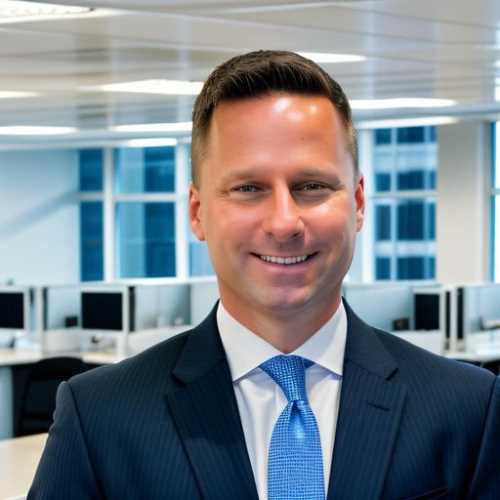
Brian was so easy to work with. He is a wealth of knowledge and definitely connected with our audience. Many participants talked with him after his presentation.
North Dakota Hospital Association Helpful 0
Michigan
Brian Uridge, MPA , CPP, CHPA, CTM is currently the Senior Director for Michigan Medicine Safety and Security at the University of Michigan Health System. He manages over 300 security and police personnel throughout the health system which has over 40,000 employees and over 1000 licensed Beds. He was also the Director of Security Services for Spectrum Health Delivery System in Grand Rapids, Michigan, for the past three years. At Spectrum, Director Uridge led more than 120 safety, security and security police officers, providing security for approximately 27,000 employees system-wide at over 120 locations.
ber of the Kalamazoo Department of Public Safety in Kalamazoo, Michigan for more than 23 years. Kalamazoo Public Safety is the largest fully integrated Police, Fire, and EMS agencies in the United States, with more than 200 sworn personnel. During his career, Brian worked in every division within the agency and held every rank as a command officer. He also served as a member of the Special Weapons and Tactics Team (SWAT) for 18 years, serving 6 years as the SWAT Commander. Brian served as the Assistant Chief for the final 4 years of his career, retiring in August 2013. He is the recipient of numerous awards including the Kalamazoo Public Safety Medal of Valor in 1997 and Kalamazoo Public Safety Lifesaving award in 2013.
Brian holds a Bachelor’s degree in Criminal Justice and a Master’s degree in Public Administration. He is a graduate of the FBI National Academy, along with being a Board Certified Protection Professional (CPP), Board Certified Healthcare Protection Administrator, (CHPA) and Board Certified Threat Manager (CTM).
Rapid Response: Real-World Lessons in Hospital Incident Command for Police and Fire Events
In today’s dynamic threat landscape, hospitals must be prepared to respond swiftly and effectively to critical incidents involving law enforcement and fire services. Rapid Response: Real-World Lessons in Hospital Incident Command for Police and Fire Events will explore high-impact case studies from actual events where coordinated emergency response was crucial to protecting patients, staff, and infrastructure. This keynote will provide practical insights into activating hospital incident command systems, building effective partnerships with first responders, and navigating the chaos of active threats, structural fires, and other high-risk scenarios. Attendees will leave with actionable strategies to enhance preparedness, improve on-scene coordination, and lead with confidence when every second counts. Drawing on lessons learned from both successful responses and unexpected challenges, the session emphasizes adaptability and communication under pressure. These real-world experiences underscore the importance of training, leadership, and cross-agency collaboration in high-stakes situations.
Using Threat Assessments in the Prevention and Intervention of Active Shooters and Targeted Violence
Tragic events across the country in recent years have highlighted the dangers posed by targeted violence and active shooters. To identify, evaluate and manage potentially threatening situations affecting our communities, multi-disciplinary Threat Assessment and Management programs must be developed to evaluate and address violence and threats of violence made toward members of the community. Using evidenced-based processes focused on Trust, Training, and Technology, we can significantly reduce the risk and anxiety surrounding these events. This presentation provides real-life examples of Threat Assessments the speaker has investigated and takes you through the parallel journey of investigators and victims, each with unique yet similar frustrations, emotional impacts, and identified gaps in the processes.
Safety, Security, and Emergency Management within the healthcare community, amid a Pandemic.
Description:
During these uncertain times, security and emergency management officials are being tasked with countless duties to mitigate risk. It is not enough that we keep people safe; we must take on the added role of ensuring people feel safe and focus on reducing anxiety. Pandemics place unexpected burdens on health care professionals, infrastructures, employers, and medical resources. It is crucial to anticipate the stresses associated with this work and put in place supports for health care workers. Preparing and responding to a pandemic involves communication, training, coordination of scare resources, innovative violence reduction strategies, long term planning, and in the moment, decision making.
This presentation is designed to provide tools and resources to educate clinical leaders, emergency managers, executives, agency trainers, human resources, and security officials based on lessons learned during the pandemic response in a large healthcare setting.
Creating a Safer School Environment through Prevention, Intervention, and Response
Objectives:
Understanding school violence statistics, myths, prevention methods and best practice models. Topics such as Active Shooter vs. Targeted Violence, Intimacy Effect, Spillover Effect, Predatory Incidents vs. Impulsive/Reactive Incidents, and How to create Upstanders from Bystanders to help Prevent Violence.
How to develop a community culture that involves the four pillars surrounding school violence prevention: Educators, Community, Family, and Law Enforcement.
How to implement community policing-based school security models focused on trust, transparency, and training. These include engaging stakeholders using nontraditional methods, applying CPTED principles and changing traditional incentive models to reshape how a community approaches school safety and security.
Achieving a Culture of Zero Violence: Leadership Strategies to Improve Healthcare Safety and Security Programs
Violence is one of the largest occupational hazards facing healthcare workers today. According to the U.S. Bureau of Labor Statistics, between 2011 and 2013, just over 70 percent of all workplace assaults occurred in healthcare or social service settings. Violence reduction programs should be focused on developing a system-wide approach that recognizes every health care system is a community, with every floor being a unique neighborhood, each with different dynamics. Building trust, transparency and training along with implementing a system-wide strategy focused on reducing risk and anxiety through exceptional experience based nontraditional contacts, staff training, professionalism and critical incident response, forms the basis from which a strong security program is built.
We work with a lot of speaking organizations... Let me tell you - ESB is the best! Matt Meyer is by far the best agent to work with!

Everyone on the ESB team (Matt, Sheryl, etc.) has been great to work with for our events. Looking forward to keep working with ESB!

We had a positive experience with ESB. Matt Meyer is a great communicator and easy to get a hold of. He helped us through the process to make..

ESB was patient, thorough, and responsive during the planning process. Thank you for making this such a great experience for us!

ESB supported our needs and the needs of our speaker throughout the entire process. I highly recommend working with ESB to find your next spe..

"It's always a pleasure to work with ESB. Very professional and personable staff. Thanks!"

"Excellent! Thank you for being a true partner to our organization and its development."
"They are the only speakers bureau I will even consider using!"

A wonderful bureau to work with! Big ups to everyone who helped make our event a success. Fingers crossed we get the chance to collaborate fo..

"As always, you are the best most responsive speaker bureau I've ever worked with!"


Call to discuss how we can you help find the right speaker(s) for your organization.
© 2026 Executive Speakers Bureau. All Rights Reserved.
Design and Developed by eBiz Solutions


Executive Speakers Bureau consistently receives praises about our speed and efficiency. From the beginning of your event planning, our extensive online speaker database and resourceful staff allow us to quickly equip you with the best speaker for your event.
Need a last minute speaker? No worries. Our speed and efficiency help us give you ideas for speakers in one hour or less.
April 28, 2026