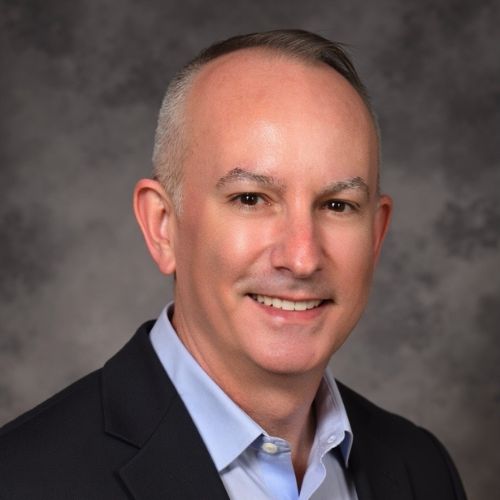
Shawn Galloway
- President and Chief Operating Officer of ProAct Safety®
- Safety Culture Excellence
- Columnist for several magazines and coauthor of STEPS to Safety Culture Excellence
Travels From
Texas
Shawn Galloway Speaker Biography
Shawn M. Galloway advises many of the world’s most respected organizations on how to build safety excellence that lasts. Widely recognized as a leading authority in his field, he has published more than 500 articles, authored several bestselling books, and created the first-ever safety podcast, Safety Culture Excellence. His honors include being named to the Top 50 People Who Most Influence EHS and to the Top 10 Speakers. Shawn’s expertise is regularly featured by major media outlets, including Bloomberg, Fox News, The Daily Mail, Dubai One, U.S. News & World Report, Sirius Business Radio, and Wharton Business Daily, as well as top safety magazines and podcasts. Through his roles on the Harvard Business Review Advisory Council, the Forbes Business Council, and the Fast Company Executive Board, he continues to influence how executives think about safety performance and culture.
Think Like an Octopus, Not a Tin Man: Safety Excellence in a Complex World
Traditional safety programs still behave like the Tin Man—rigid, mechanical, and slow to adapt—while work has become faster, more complex, and less predictable. In this keynote, Galloway explores why the next era of safety excellence demands that leaders think more like an octopus: sensing weak signals, adapting in real time, and empowering decisions at the edge of operations.
Drawing on global client experience, Shawn shows how to evolve safety from a compliance-driven function into a living, learning capability woven into everyday work. Attendees will learn how to:
1. Replace one-size-fits-all programs with flexible, context-aware practices
2. Build “eight-armed” safety capacity across leaders, professionals, and frontline teams
3. Shift from lagging indicators to dynamic learning and anticipation
This keynote is ideal for executives and EHS leaders ready to modernize safety for a complex world.
The Bridge to Excellence
Since 2008, the Bridge to Safety Excellence model has been a proven model hundreds of organizations have leveraged to convey the precise elements to be addressed to close the gap between compliance and culture, determine where they are on the path to sustainable excellence, and develop a strategy to achieve it.
Based on the 2023 best-selling book Bridge to Excellence: Building Capacity for Sustainable Performance, this keynote reframes safety as a business excellence strategy, not a seperate initiative.
Using the Bridge as a simple visual, you will diagnose where you are today, clarify what is truly creating your current results, and build a focused plan to strengthen capacity. Participants learn the five capacities that must work together to produce sustainable results: system, leadership, culture, engagement, and strategic.
Expect real-world examples, plain-language takeaways, and a shared vocabulary your team can use to align priorities, reduce “only-when-watched” performance, and build confidence in your ability to prevent, respond to, and recover from undesirable outcomes.
Shared Ownership
Engaging Subcultures for Safety Excellence
Most organizations invest heavily in safety programs, messaging, and training, yet still see uneven adoption, inconsistent behaviors, and “pockets” of excellence that don’t spread. Why? Because the culture that shapes performance is built and protected inside frontline team subcultures: the unwritten rules of “how we do things here,” the behaviors peers reinforce, and what leaders consistently reward, or silently tolerate.
In this keynote, Shawn M. Galloway introduces a practical, frontline-ready approach to strengthening safety culture by working where culture truly lives: at the crew and supervisor level. You’ll learn how to spot and map subcultures quickly using four diagnostic questions that reveal what’s rewarded, what’s tolerated, what people fear, and what they feel proud of: insights that explain why people make the choices they do when no one is watching.
The session applies a powerful “fear and concern” lens to show how day-to-day leadership habits strengthen or erode trust, psychological safety, and engagement. You’ll leave with five proven leadership plays you can implement immediately to make ownership the norm, not the exception. This keynote is designed for leaders who want action, not theory. You’ll walk away with a clear, practical 30/60/90-day path to build shared ownership across teams by changing the routines and reinforcements that drive daily behavior.
STEPS to Safety Culture Excellence
Most safety culture work stalls because organizations pursue activities before choosing a strategy.
In this keynote, based on STEPS to Safety Culture Excellence, you will learn a repeatable, internally led process to move from compliance to a culture that sustains results after the campaign ends. STEPS, Strategic Targets for Excellent Performance in Safety, breaks culture change into small, logical tasks that build capability at every level.
We start where most programs skip: set the strategy first, then assess the current culture to find the best path to execute it. You will see how the journey moves through seven milestones, from building capability and credibility to creating passion, focus, proactive accountability, measurement, and trust.
You will leave with a clear roadmap, practical diagnostics, and a shared language leaders and frontline teams can use to prioritize, solve, and sustain the work and new culture you’ll intentionally create.
Create Ownership and Change Happens
Most safety leadership training teaches what to enforce. This keynote teaches what to coach to improve performance when you are not in the room.
Based on COACH: A Safety Leadership Fable, you will follow a story in which a high-performing troop is consolidated, cultures clash, and well-intentioned safety efforts create distraction, disruption, disengagement, and demotivation. A newly promoted supervisor, Lucy, seeks a mentor and learns a simple, repeatable framework from “Solophant” the elephant.
The keynote translates the fable into a leadership operating system built around four disciplines every people-leader can apply immediately: Familiarize, Focus, Feedback, and Facilitate. You will learn how to create ownership, strengthen trust, and build the relationships that make honest conversations and sustained improvement possible.
Participants leave with a practical coaching cadence they can use in the field, in meetings, and in everyday decisions to improve safety, quality, and reliability without burning out the organization with the next program-of-the-month.
Create Ownership and Change Happens
Most strategy work is aimed outward. Inside Strategy flips the lens inward and shows leaders how to create new value through aligned, continuous performance improvement within their own organizations. Strategy is not what to think. It is how to think, especially when the future is unknown.
Based on Inside Strategy: Value Creation from Within Your Organization, this keynote offers leaders a practical way to move beyond annual plans, slogans, and metric-chasing. You will learn why many safety and operational efforts are “plans to fail less,” and why failing less is not a strategy.
Participants will walk away with a shared definition of strategy, a simple decision filter to prioritize work, and a repeatable method to create value for internal customers and the people you ultimately serve. You will learn how to:
1.Clarify who your primary customer is this year
2.Align leaders and teams around the same “value creation” targets
3.Build confidence and competence to manage uncertainty without chaos.
Mastering the 5 Core Capacities for Sustainable Safety Excellence
Does your organization have the capacity to achieve sustainable excellence in safety performance and culture?
For excellence to become a reality in any important area of operations, especially safety, there are five vital capacities organizations must develop, monitor, and synergize to adapt and thrive in a fast-paced and ever-changing world: System, Leadership, Engagement, Cultural, and Strategic.
Based on extensive cross-industry research and decades of experience leading change in all major industries, this keynote leads the audience on a thought-provoking journey balancing case studies with practical execution guidance and matures the thinking necessary for driving change at all levels of the organization.
Beyond the Physical Toll
Workplace injuries and incidents can have far-reaching consequences beyond an employee's immediate physical harm.
The collateral damage resulting from such incidents can significantly impact various aspects of an organization and the lives of those connected to injured individuals.
Leveraging the lessons learned from Deepwater Horizon, Rana Plaza, Boeing, Chornobyl Nuclear Power Plant, Takata Corporation, Peanut Corporation of America, and more, this keynote emotionally and unforgettably explores how organizations can prevent and mitigate the consequences of safety incidents.
A Tactical Framework to Address Risk Perceptions and Risky Practices
How well are you onboarding new employees to the stated expectations and the practices that are perhaps taken for granted? When safety practices become cultural, the way we do things around here, sometimes these practices are forgotten about when educating and training new employees. Leveraging the Plan, Do, Check Act (PDCA) methodology, this session provides a proven process to help organizations facing new employee training and onboarding challenges.
Tomorrow Isn’t Promised: Embracing Life’s Fragility
On 14 November 2022, my wife, Misty, and I arrived in Bali, Indonesia. We were there to celebrate with one of my closest and longtime friends, Kevin Henderson, and his fiancée, Stephanie. We enjoyed pursuing adventurous vacations with them, with the previous year hiking to the top of an active volcano in Guatemala. This year it was a planned hike to a summit sunrise. After the climb, during the descent, high above the clouds, around 1,000 feet below the summit, at 7:30 a.m. on his 51st birthday in a beautiful location, one of the holiest spots in Bali, my dear friend had an accident. He passed away, taking his last breaths while chasing his dreams below the mountain's peak he had just conquered.
The lessons learned from such a tragic event extend far beyond the immediate aftermath and serve as a stark reminder of the fragility of life and the importance of cherishing every moment we have with our loved ones.
Ten New Trends That Keep Me Up at Night
Workplaces have changed (some drastically) since 2020, making previous safety strategies obsolete. I've been on the constant lookout for potential stressors. Unfortunately, I've found them everywhere, and they are not just impacting safety performance and safety culture. We must change our approach to meet these new realities; otherwise, we can expect broader organizational challenges in the days ahead.
These indicators (trends) observed in many workplaces that concern me and should concern you. Ten new trends are significantly impacting overall performance and culture in most industries. A new strategy is needed.
Elevating Occupational Safety: A New Holistic Approach for Excellence
To create a workplace with the capacity to achieve excellence in occupational safety, organizations must employ a multifaceted, holistic approach that integrates existing and new key concepts—visual literacy, precaution competency, psychological safety, shared ownership and collective intentionality, and a coaching culture. By synergizing these concepts, organizations can cultivate a safety culture beyond compliance, fostering an environment where individuals actively contribute to and benefit from a collective commitment to the pursuit of safety excellence at work.
Integrating these elements creates a robust safety culture that protects employees and positions the organization as a leader in safety excellence. As organizations embrace this holistic strategy, they pave the way for a workplace where safety is not just a set of protocols but a collective intention that permeates every aspect of the organizational culture.
Leading Through Difficult Times
This session will focus on how many of the best organizations and leaders reframe how safety excellence is defined, a leader’s role in creating it, and how to continuously improve their journey to safety excellence during difficult economic times. The talk will not only be motivational, but will leave the audience with proven questions and tactics to return to their organizations and, immediately and strategically, make a substantial and measurable difference in both incident prevention and culture enhancement.
The Transformational Leader: From Hands and Feet to Hearts and Minds
How do we get more effort from people? A leader’s ability to inspire and influence will become his or her single most effective competitive advantage. Once higher levels are reached in an organization, individuals are judged less by what they have personally contributed and more by what they have led others to accomplish. Do employees perform excellently because you inspire them to, or because they are fearful? Do you have a “have-to” or a “want-to” culture? Sustainable excellence develops from a motivated and inspired workforce; it is not the result of behavioral manipulation or managed delegation. All leaders face challenges that intensify with each new hypercompetitive priority. The successful leader of tomorrow must become transformational to succeed. Attendees will receive tools and techniques that can be immediately applied, transforming their value to the organization and helping them recognize sustainable step-change improvement in culture and performance.
Safety Through Eating Pizza: How the Safety Brand Gets Compromised
What is your safety team's brand? How do others feel about the improvement efforts and the people leading it? It is easy for a brand to lose its identity, or worse, allow the wrong one to become created. Each year, more examples make the news in which a single bad customer experience compromises the company's brand. With products, services, and even cultures, the more negative the experiences are, the louder the stories negatively affect perceptions of the brand. What stories are creating the perception of your safety improvement efforts within your company?
Ten Questions to Mature Safety Thinking of Leaders
All progress begins by thinking differently. Today's current views regarding safety excellence should be at least partially obsolete in ten years: how safety excellence is defined and achieved, what the goals should be, who is responsible for what, and how long it will take in time and resources. What are your leaders' perspectives on this? How well aligned are they? With the answers to the questions provided in this engaging talk, not only will you gain an understanding of where the current thinking is, you will also know where to focus your efforts to help mature the thinking and, subsequently, align the safety efforts to strategically improve safety performance and culture.
Why Safety Competes with Production, and What to Do About It
Safety, quality and production are competing priorities in most organizations. Rather than more company messaging, first focus on the experiences of workers to change perceptions. Today, more than ever, corporations work aggressively to change how safety is perceived and valued within day-to-day decisions. "Safety first," "safe production," and "safety is a value," are example messages throughout countless companies, all with good intent to influence employee actions; but they never fully do the job. Values are created within an organizational culture when specific beliefs are reinforced at or near the point of decision. If you are not actively managing the marketing and experiences of beliefs that should become values within your organization, others will be; and you may not like the stories they are telling others. With easy to implement approaches and several case studies, learn how to address the production vs. safety perception within your organization.
10 Reasons Your Safety Strategy will Fail
If business strategy is still an evolving concept, safety strategy has a long way to go to reach extreme levels of effectiveness. Based on research reviewing over 300 corporate to site-specific safety strategies, there were ten common problems found in most company safety strategies. This presentation outlines these issues, and details how to spot, prevent and overcome them. Attendees will receive frameworks that will allow them to return and immediately begin taking steps to improve their strategy and execution. It is time to rethink and fix your safety strategy through this talk full of practical examples.
Creating a Clear Vision of Safety Excellence
If safety excellence isn’t clearly defined and aligned throughout an organization, it won’t be achieved. Ask ten top leaders to define safety excellence and, on average, you’ll get eight distinctly different answers. If it isn’t clear to executive leadership what safety excellence looks like or if they aren’t all on the same page, expect misalignment throughout the rest of the organization. Herein lies the importance of operationalizing safety excellence. Learn how to better define, communicate and align your organization on the destination of safety excellence and how to more effectively measure your progress towards it.
Pursuing the Win
We all want to win in safety, but how aligned are we on what performance will achieve the desired results we are all pursuing? Is safety delegated to the safety professional, or owned by everyone in the company? Does everyone see themselves as actors in the safety strategy? What can the best Olympic athletes teach us about our quest for safety excellence? After two decades, working across all major industries globally, bestselling author, Shawn M. Galloway shares the most valuable insights to align and engage the entire workforce. In this thought-provoking and humorous keynote, learn from an icon in the industry what it takes to achieve and sustain excellence in safety performance and culture.
Leading through Trust, Buy-In and Ownership - At All Levels
Do employees perform well because you inspire them to or because they are fearful? Do you want a culture of have-to or want-to? The answer is obvious. However, at all levels, many leaders unintentionally make some common mistakes that undermine what they are trying to accomplish. Some actually harm their own efforts while trying to improve performance and culture. Good intentions are not enough! To create sustainable, above-and-beyond performance in others, you must create an environment in which individuals feel motivated to provide critical discretionary effort. Learn how in this engaging keynote by bestselling author, Shawn Michael Galloway.
Leveraging Commander's Intent for Success in Safety
How clearly have you communicated your intentions for safety? Does your team know why safety is important to not only the business, but also to you personally? Knowing the only constant in business is change, do they know what to do to reach or accomplish the safety objective when conditions or plans do not work out as conceived? Commander's intent (CI) is a military method that explains what must be accomplished and why. It also clearly defines what success of the mission looks like. Explore the five areas to focus on to leverage CI in your efforts to achieve excellence in safety performance and culture in the workplace.
Agility and Resilience Determines Your Success in Uncertain Times
How agile is your business? What about your approaches to pursuing excellence in internal performance? With winds of change, too much rigidity can lead to fracture, and not all fractures can be repaired. Distractions are inevitable. The best-laid plans will sometimes experience an ambush, an unexpected event that pushes efforts off the intended course. When things do not go as planned, how adaptable and quick to respond you are will be your primary competitive advantage. You need agility for resilience. How resilient is your safety culture? Learn how to improve your ability and resilience in this through-provoking presentation.
The Power of Tribes and the Case for Safety Strategy
We all have an intrinsic instinct to belong to small groups with a shared purpose. These are tribes. Do you have a tribal safety culture? The power of tribes and the case for a safety strategy go hand in hand. Culture is a crucial element in shaping behavior and beliefs, but it must be supported by a well-defined plan that aligns with the overall business objectives. Hiring for cultural fit, guarding the front door, and proactively shaping the narrative are all essential considerations for fostering a strong safety culture as well as the overall occupational culture. By integrating safety into the broader strategy and actively managing the culture, organizations can achieve and sustain safety excellence and create a tribe to be proud of.
Truths About Safety Accountability: How to Balance Psychological Safety and Discipline
What comes to mind when you hear the word "accountability"? How do you balance creating a psychologically safe environment while also applying discipline as a tool of last resort? Accountability can be both reactive and proactive. The consequences of being accountable or not can also be positive — desirable behaviors or results — and negative — undesirable results or behaviors — depending on how it is received. Accountability can also focus on results and be proactive, like with behaviors or performance. Accountability in safety doesn't have to be a dirty word or a burden to implement. If done correctly, accountability can be a tool to achieve excellence in the workplace and in overall safety results.
Invisible Wounds: The Crucial Role of Moral Injuries and Impact on Safety Culture
Company safety culture has been a focus for ensuring the well-being of employees and maintaining operational integrity. However, an often-overlooked aspect of safety culture improvement is the consideration of moral injuries. Understanding and addressing moral injuries is crucial for creating a workplace environment that prioritizes physical safety and attends to psychological and ethical dimensions of employee well-being.
Moral injuries are important to understand within the context of occupational culture because they directly influence the workplace psychological, social and reputational aspects. By incorporating these learnings into safety programs and organizational practices, companies can create resilient and sustainable environments that prioritize physical safety and address the ethical dimensions of work, enhancing trust, boosting employee morale and fortifying their commitment to safety, ultimately fostering a workplace where both physical and moral well-being are prioritized.